
Understanding AS 1428.1:2009 and Backflow Prevention Challenges
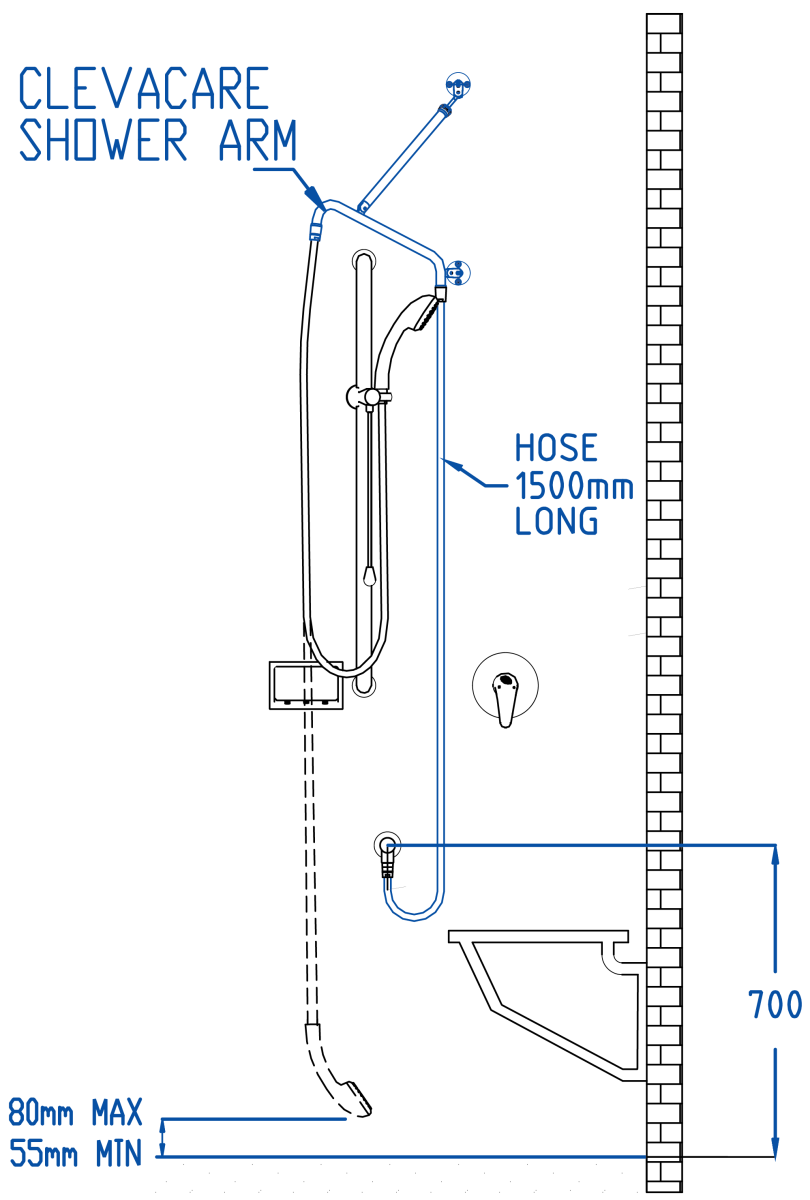 Designing accessible bathrooms that comply with AS 1428.1:2009 is essential for meeting the Plumbing Code of Australia (PCA) requirements. These standards ensure safe and functional spaces for people with disabilities and ambulant disabilities. However, recent amendments have introduced challenges for plumbing design, particularly around shower outlet heights and backflow prevention.
What Changed?
- Maximum wall outlet height: 700mm from finished floor level.
- Minimum shower hose length: 1500mm.
- Increased risk: Shower heads may fall below the rim of the toilet pan, creating a high-hazard backflow risk.
Design Considerations
To avoid compliance issues:
- Discuss accessibility requirements during the design stage.
- Consider reconfiguring plumbing fixtures or moving the shower outlet horizontally away from the toilet pan.
- Avoid installing high-hazard backflow devices like RPZd, as they are not suitable for personal hygiene outlets and require annual testing.
The Recommended Solution
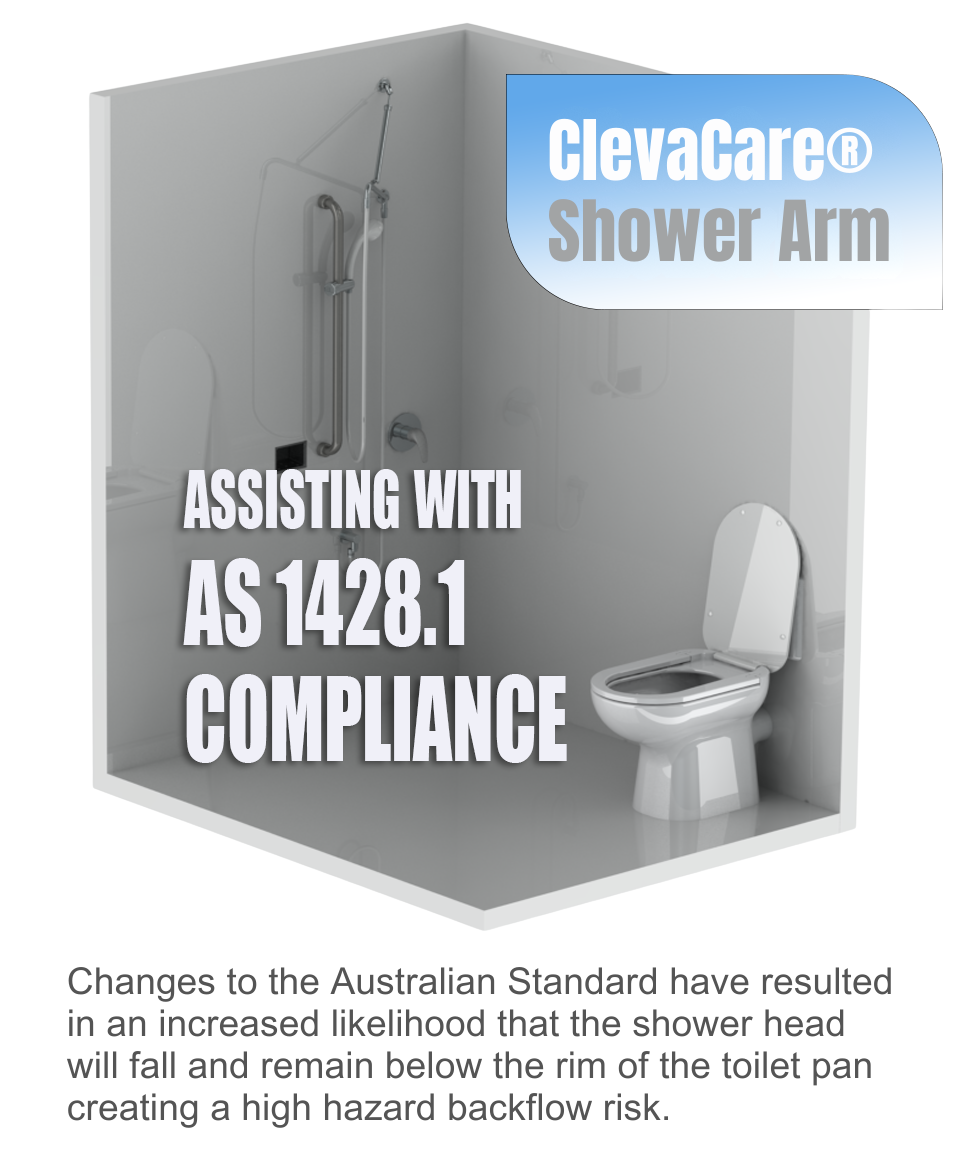 When reconfiguration isn’t possible, the GalvinAssist® ClevaCare® Shower Kit offers a deemed-to-satisfy solution under AS 1428.1:2009. This innovative system:
- Retracts the shower head after use.
- Eliminates cross-contamination hazards.
- Meets accessibility and compliance requirements.
Ambulant Disability Defined: People with mobility disabilities who can walk. AS 1428.1:2009 includes mandatory installation requirements for taps, fixtures, and fittings to assist these users.
Explore the full GalvinAssist® ClevaCare® range and ensure your bathroom design meets accessibility and safety standards.