
Mental Health Solutions

Galvin offers Australia’s largest range of ligature- and vandal-resistant tapware, Wallgate sanitaryware, grab rails and drains, designed to create safe, therapeutic environments in hospitals, courts, rehabilitation and secure care facilities.

Normalisation 

Our designs support a shift toward patient-centred care by fostering environments that feel familiar, dignified and homelike. By reducing institutional aesthetics, Galvin’s solutions help restore autonomy, promote engagement, and improve wellbeing in mental health settings.

Ligature & Vandal Resistance

Products include ligature resistant tapware and solid-surface sanitary fixtures designed to minimise self-harm risk. Built tough for high-vandal areas, our robust mechanical and electronic fittings consistently meet the needs of cells, acute wards, courts, and rehabilitation centres.

Full-Room Solutions  

From thermostatically regulated showers to ligature-resistant toilets, wall-mounted basins, grab rails, mirrors, drinking outlets and drains: Galvin can deliver complete bathroom solutions. Our expertise spans from initial design input through to commissioning, for both small-scale interventions and large institutional facilities.

Whole-of-Life Value

We prioritise long-term value: built-in durability, simplified maintenance, and reduced downtime keep whole-of-life costs low. Our fixtures and fittings are designed for continual use in demanding care environments, supported by accessible spare parts and local servicing. 

Quality, Support & Compliance

Manufactured to meet all relevant Australian Standards, and WaterMark and WELS requirements, Galvin products are rigorously tested in Australia and the UK. Built for longevity and backed by our Australian-based technical team, our offerings assure performance and reliability.

Virtual Showrooms & Design Tools

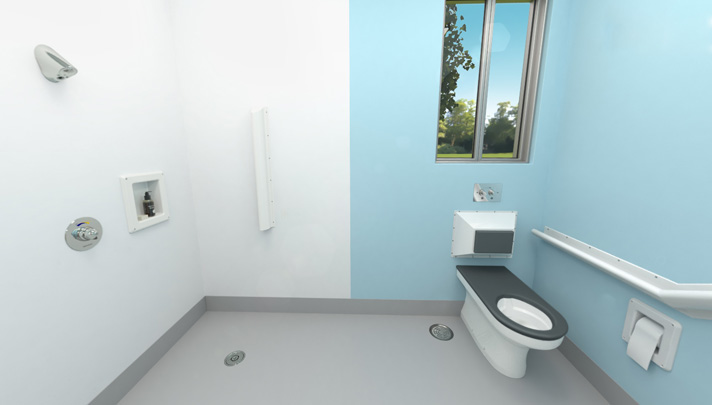
Experience our mental health solutions via a fully interactive 3D virtual bathroom walkthrough, exploring product placement and performance in context. Our downloadable Specification Brochure and Best Practice Bathroom white paper streamline design decisions and help ensure compliance.

Experience it yourself

Want to see how our solutions fit into your mental health space? Head into our 3D virtual bathroom to see our products in action. Move around and click on the products to see where we can assist in creating a safe and water efficient environment.

Enter Virtual Walkthrough
Mental Health Solutions image

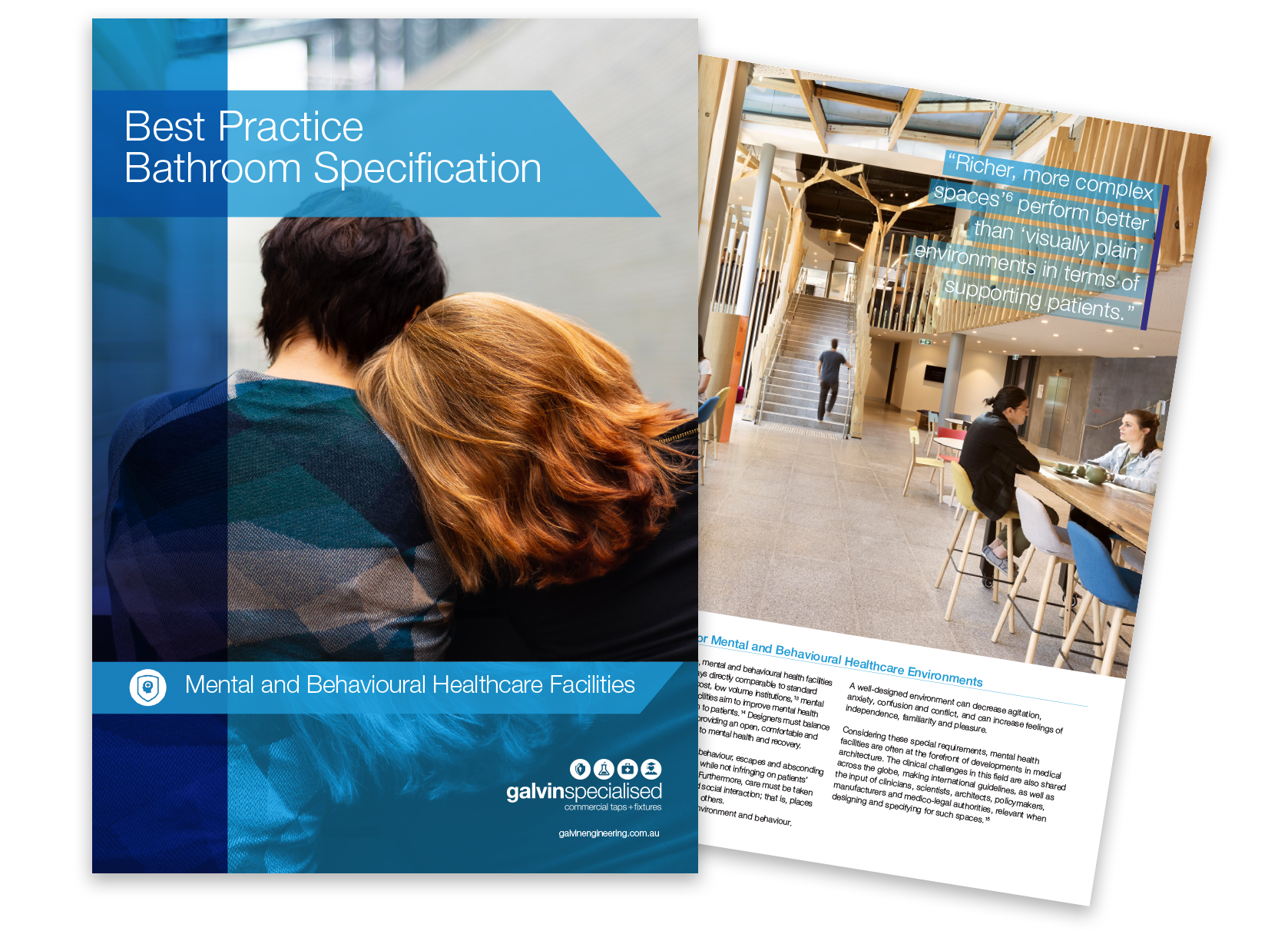
Best Practice Bathroom Specifications

Check out our white paper addressing the demand for considered and tailored design approaches that ensure bathroom features, fixtures and fittings meet the varied needs of all users in mental and behaviour healthcare facilities.

We make specifying easy

Save time planning your next project with our Mental Health Specification Brochure. We can help you ensure you're specifying products that are fit for application and compliant with relevant standards and requirements for total peace of mind.
 

See our Mental Health Solutions:

Frequently Asked Questions 

Designing for mental health requires balancing two critical aspects:

  • Managing Risks: Create safe environments that minimise opportunities for self-harm or harm to others. This includes using ligature-resistant and vandal-resistant fixtures, removing hazards, and ensuring robustness and durability of all fittings.
  • Promoting Autonomy and Control: Support patient dignity and independence by providing choices, privacy, and spaces that encourage social interaction. Design should foster a sense of ownership and normalisation, helping patients feel less institutionalised.

This balance ensures safety without compromising therapeutic goals, creating environments that are secure yet supportive.

Normalisation in mental health facilities refers to creating environments that resemble everyday life rather than institutional settings. The goal is to promote dignity, independence, and social interaction for individuals with mental health conditions. Key principles include:

  • Designing spaces that feel homelike and non-clinical
  • Encouraging autonomy and self-determination
  • Supporting social connections and community participation
  • Reducing stigma and fostering inclusion

By prioritising normalisation, facilities can create therapeutic environments that empower individuals and support their successful transition back into society.

Anti-ligature/ligature-resistant design refers to features that prevent or minimise the risk of ligature attachment, a common method of self-harm. These measures are essential in mental health and correctional facilities to protect vulnerable individuals. Key elements include:

  • Rounded edges and smooth surfaces
  • Concealed fittings and tamper-proof fixings
  • Anti-grip surfaces

By incorporating these design elements, the risk of self-harm is significantly reduced, creating safer environments that support recovery and dignity without compromising functionality.

Learn more about ligature resistance

Anti-vandal/vandal resistant design refers to features that prevent or minimise the risk of intentional damage or tampering in high-risk environments. These measures are essential in mental health, correctional, and secure care facilities to maintain safety and reduce maintenance costs. Key elements include:

  • Heavy-duty materials such as stainless steel or reinforced composites
  • Tamper-proof fixings and concealed fittings
  • Impact-resistant structures to withstand force
  • Protective coatings to resist scratching and corrosion

By incorporating these design elements, vandal-resistant fixtures ensure reliability, reduce downtime, and create secure, well-maintained spaces that support patient care without compromising functionality..

Learn more about vandal resistance

Yes. The Australian Health Facility Guidelines (AusHFG) provide clear recommendations for mental health environments:

  • Physical Safety Requirements: Architects and designers should focus on eliminating or reducing ligature risks. Anti-ligature/ligature-resistant products mitigate—rather than eliminate—risk, so operational protocols remain essential.
  • Plumbing Fixtures: All fixtures and fittings in consumer ensuites and bathrooms should be specifically manufactured and marketed as ligature-resistant, installed per manufacturer instructions. They should be concealed or shrouded with tamper-proof fixings and resistant to breakage or removal.
  • Additional Measures: Where possible, toilet cisterns should be concealed, and basins shrouded with tamper-proof fixtures to prevent tampering and ensure safety. These requirements apply to consumer toilets and visitor toilets within inpatient units.

Galvin products are designed to meet these guidelines and relevant Australian Standards, supporting safer, compliant mental health spaces.

Currently, there are no specific Australian Standards for ligature-resistant products. To ensure safety and durability, Galvin conducts rigorous in-house testing through our Research and Development team. Additionally, our partner Wallgate in the UK tests products to recognised standards, including BS ISO 1972-3:2007 for decorative solid surface materials. These processes guarantee that our solutions meet the highest performance and safety requirements for mental health environments.

In mental health facilities, tapware and sanitaryware must be robust, durable, and homelike to withstand demanding conditions. Common materials include:

  1. Stainless Steel - exceptional strength, corrosion resistance, and hygienic properties. 
  2. Brass - excellent durability, structural integrity, and resistance to corrosion. 
  3. Solid Surface - enhanced strength, impact resistance, and dimensional stability, minimising breakage and ensuring long-term performance.

When selecting tapware and sanitaryware for mental health environments, look for design elements that minimise ligature risk, vandalism, and harm to self or others. Key features include:

  • Rounded and smooth edges
  • Concealed fittings
  • Ligature-resistant spouts and controls
  • Breakaway or load-limiting features
  • Anti-grip surfaces
  • Robust construction

These features work together to create safer, more secure spaces without compromising functionality or hygiene.

Our mental health range includes ligature-resistant tapware, showers, Wallgate solid-surface toilets and basins as well as grab rails, drains and electronic controllers.

Yes. Galvin can tailor configurations for mental health environments, including ligature-resistant tapware, sanitaryware, grab rails, and drains. We also offer finish options and media layouts to meet project-specific requirements.

Visit our case studies section to see successful mental health projects featuring GalvinCare® and Wallgate solutions in hospitals, secure care, and rehabilitation facilities.

Case Studies | Galvin Engineering